
Triangle catering association’s first Black prez reclaiming hospitality, offsetting AI
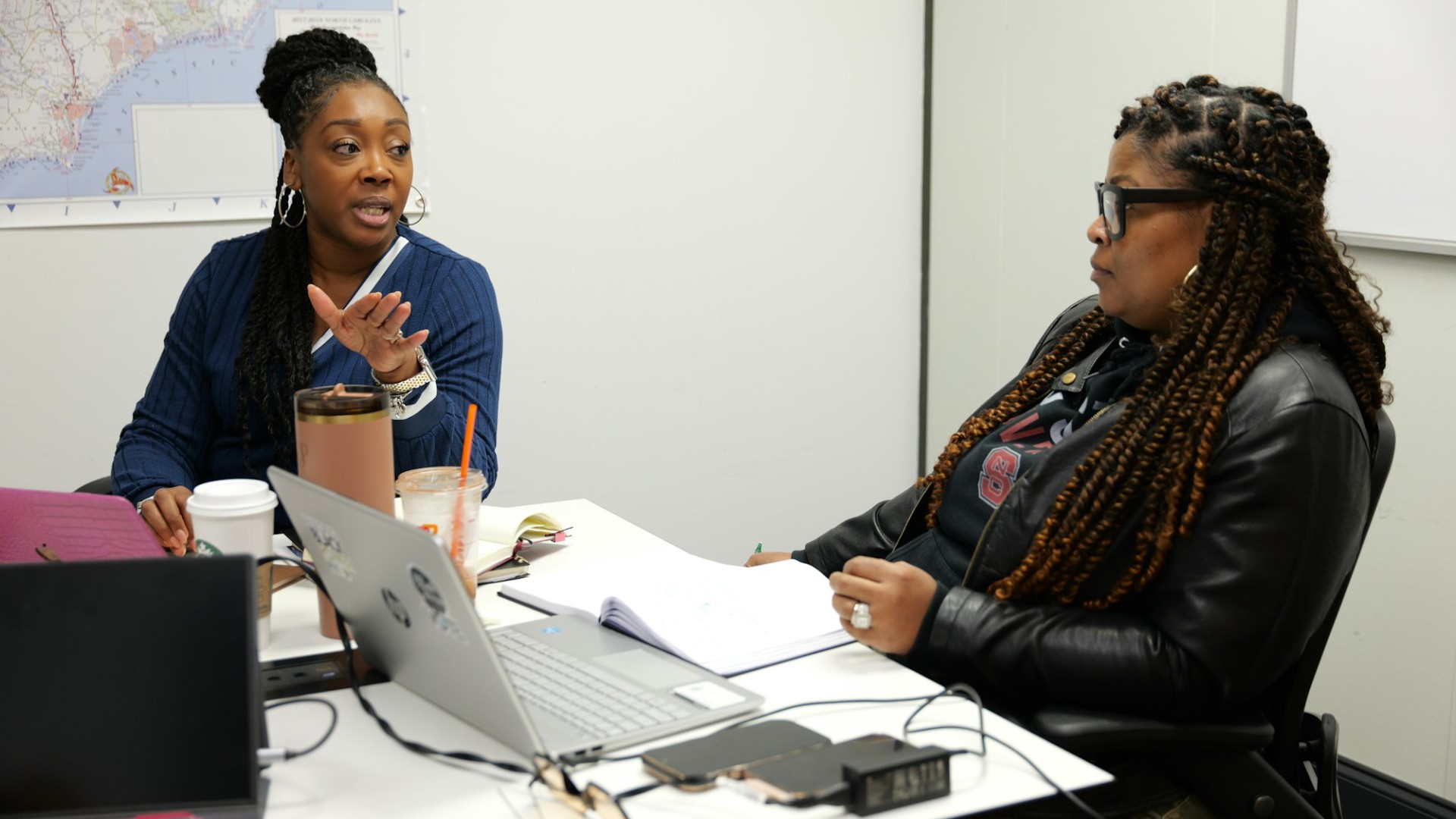
Arie Bobbit (right), the community engagement manager for North Carolina Black Alliance (NCBA), discusses the upcoming NC Black Summit with Katesha Phillips, NCBA’s director of constituent services and community engagement during a planning meeting at the organization’s downtown Raleigh, North Carolina, headquarters on Feb. 6, 2026.
RALEIGH, N.C. — Artificial intelligence is doing the most right now.
Most folks just call it AI, out here providing mental health services. Engineering software. Getting booed up with human beings.
But AI can’t do event planning — not the way Arie Bobbitt does it:
“We were looking for nice centerpieces for the main ballroom,” recalled Katesha Phillips, the director of constituent services and community engagement for North Carolina Black Alliance (NCBA).
Phillips was flashing back to calling on Bobbitt in 2025 for the organization’s annual summit on environmental injustice and health care.
“She came up with the idea to purchase small succulents, which went perfectly with the theme of the event,” Phillips said. “Since they were live, we were able to give them to attendees at the end of the event. An environmental gift that keeps on giving.”
Narrative shift
The operative word here is planning — event planning, as opposed to merely throwing a party.
“The main misconception is that it’s all about making space look pretty and not the logistics,” Bobbitt said. “You can have a beautiful room but a terrible guest experience if you don’t think about the logistics.”
Some people tasked with organizing an event see it as just work.
Bobbitt creates art.
“Event planning is definitely an artform,” Bobbitt said.
As the first Black president of the Triangle chapter of the National Association for Catering and Events, Bobbitt is reclaiming service work, explained James Griffin, Ed.D., a professor in the College of Hospitality & Business at Johnson & Wales University’s Providence, Rhode Island, campus.
“The long history of the Black and African-American community and that notion of hospitality, a lot of the professionalization of it dates back to the origins of household servants — which is an offputting way of looking at it — but we see that lineage when we teach. We’re building on the shoulders of those former household servants and professionalizing it,” Griffin said. “We professionalized it, and we refuse to allow it to be indentured servitude. We refuse to allow it to be this form of servitude that was subordinate, and we turned it into service and hospitality and the heartfelt gift of hospitality.”
Emotional intelligence outsmarting AI
Bobbitt has a new role with NCBA, too. She’s the organization’s community engagement manager.
“Arie brings a wealth of events experience and strong industry relationships that have strengthened our work in meaningful ways,” Phillips said. “She has added an additional piece to this year’s 20th NC Black Summit banquet that I know the attendees will love! You will have to be in attendance to see.”
Bobbitt studied hospitality and tourism management at North Carolina Central University in Durham. She started leaning into event planning while working the front desk at a hotel.
“It’s crazy, because someone else saw my gifts before I did,” Bobbitt said. “I was an intern at the Millennium Hotel Durham, and the director of sales encouraged me to consider becoming a catering manager because of my attention to detail and my ability to anticipate needs. This aligns with my personality of not needing or wanting to be in the spotlight. I shine quietly behind the scenes and make sure those that want to be in the spotlight shine.”
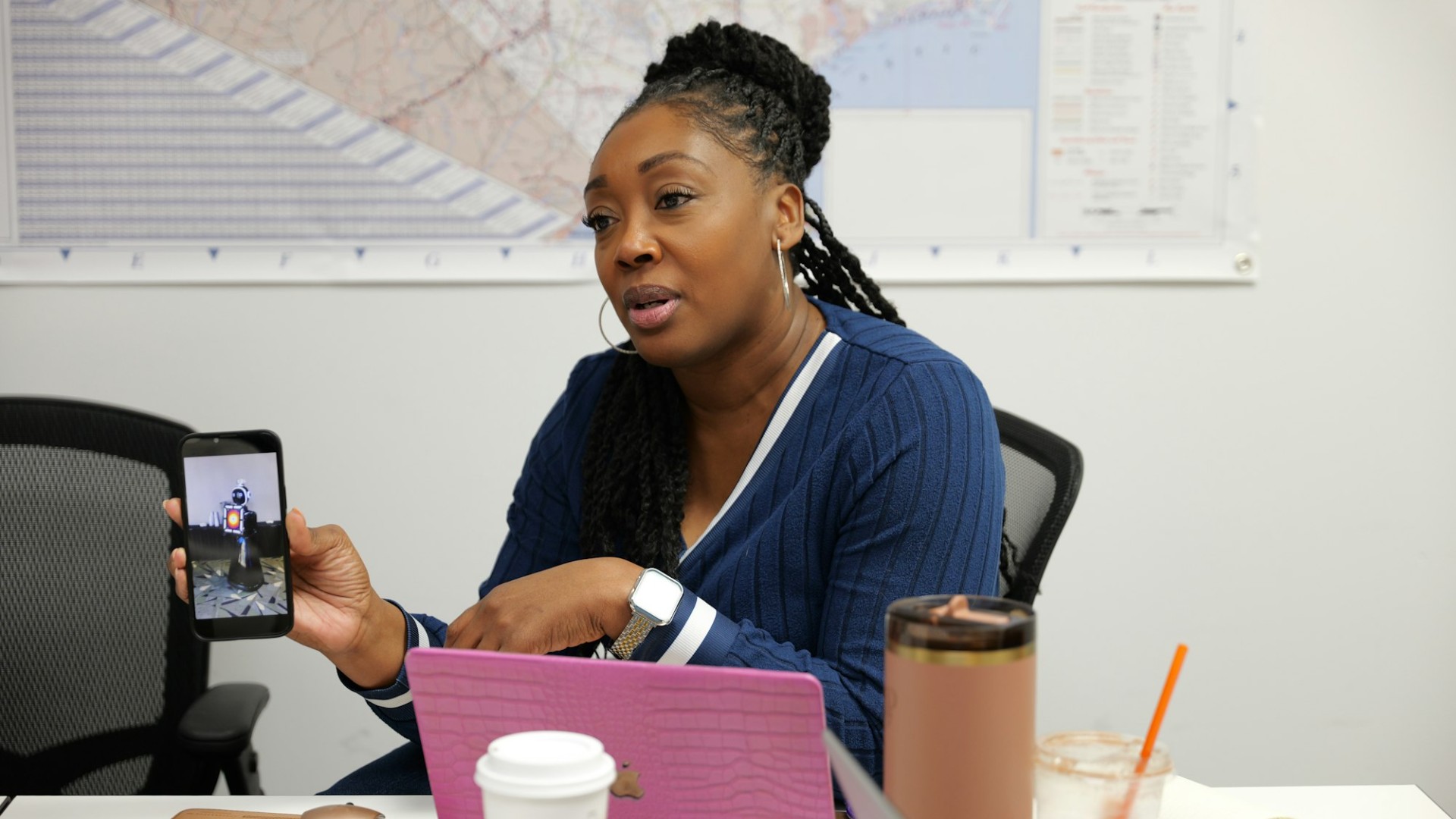
Arie Bobbitt, the community engagement manager for North Carolina Black Alliance (NCBA), is the first Black president of the Triangle chapter of the National Association for Catering & Events. She is shown here during a meeting with NCBA team members at the organization’s downtown Raleigh, North Carolina, headquarters on Feb. 6, 2026.
AI sure enough loves the spotlight, taking orders at fast-food joints, doing journalism, building websites — ahem! — event planning.
“I can take my guest menu — if I have standard recipes, which most places have — I can lay them into the AI, and I can do a production plan. And then using that production plan, AI can do my predictive schedule for labor. So I can go into an event plan based on a menu’s complexity and size, number of guests, and AI can handle not only the staff scheduling for both service and food production, but it can produce it and, in advance, can optimize it. And in a matter of four or five minutes, I can have the entire event plan done and schedule done, which typically would have taken several hours of work previously,” Griffin said. “Then there’s also a piece we know tech won’t affect, will never replace, and that’s the human touch. You know, my coming to your table with gracious hospitality to bring your first course, and the ability to look you in the eye and maybe just do open body language and a smile at a time when you might be sitting to catch your breath from a long day. You might be in recovery from a stressful event, or you might be joyful over some occasion that’s being honored, and here I am throwing you the emotion in my interaction with you to honor you. That piece, I don’t think, will be easily replaced with tech, ever. And I also think it takes a human to fully comprehend how to do that, how to engage each other with this open, heartfelt gift of hospitality.”
In other words, Bobbitt is offsetting AI with emotional intelligence. It’s job security.
“Her warm presence at our events reflects the spirit of our organization — welcoming, engaging and deeply connected to the community we serve,” Phillips said.