
North Carolina Black Alliance deepening already authentic relationships
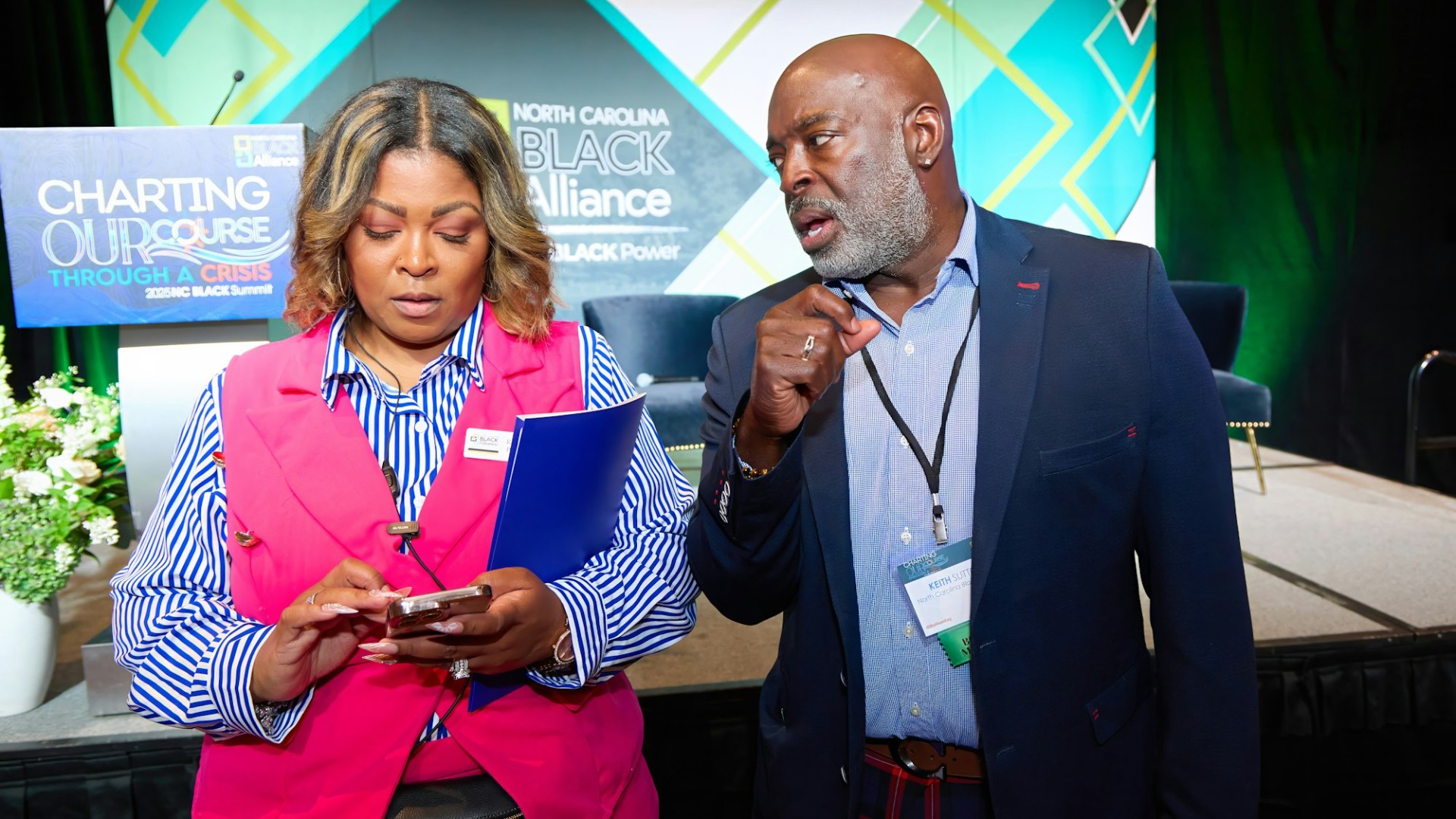
Katesha Phillips engages with North Carolina Black Alliance (NCBA) board member Keith Sutton during the NC Black Summit at the Raleigh Marriott Crabtree Valley in April 2025. In Jan. 2026, NCBA’s leaders repositioned Phillips to an elevated role as the organization’s director of constituent services and community engagement.
RALEIGH, N.C. — Relationships, relationships, relationships.
Katesha Phillips has them. There’s the Divine 9. Pastors, ministers and other faith-based folks. Black elected officials including members of the North Carolina Black Legislative Caucus and their sway over policies that impact the lives of Black people. She has them on speed dial for North Carolina Black Alliance (NCBA).
“These relationships developed over time through consistent, intentional engagement and close collaboration with NCBA’s executive leadership,” she said.
The professional friendships forged are particularly vital right now for NCBA. It’s why the nonprofit’s leaders repositioned Phillips to an elevated role as the organization’s director of constituent services and community engagement.
“Katesha shifting to her new role adds a needed capacity in our constituent services department,” said Jovita Lee, Ed.D., NCBA’s deputy director. “Historically, NCBA has prided themselves as a convener of key constituent groups within the Black community, providing a space where they can effectively strategize and set forth a policy agenda rightly fit for our communities. Her transition will help us to expand our support of these groups and provide an opportunity for new innovative ideas under fresh leadership.”
NCBA works to improve the lived experiences of Black North Carolinians by encouraging them to vote, an increasingly tall task after last year’s gerrymandering. In October, state legislators passed Senate Bill 249, redrawing voting lines to reconfigure the 1st Congressional District of North Carolina to make it more favorable for a Republican to win where voters for years chose a Democrat to represent them in Washington, D.C. One of the architects of the bill was Sen. Ralph Hise, who said advancing the agenda coming out of the White House was the sole purpose of the legislation.
“There were no Democrats involved in the process,” Hise said.
Combine that with the North Carolina State Board of Elections (NCSBE) eliminating early, in-person voting at some of the state’s college campuses, including North Carolina A&T State University, the country’s largest historically Black university. As well, the NCSBE got rid of Sunday voting in some counties. It’s enough to make people wonder why they should bother voting, NAACP North Carolina State Conference President Deborah Dicks Maxwell said.
NCBA will lean on all of those contacts in Phillips’ phone to offset that sentiment.
“My vision is to strengthen relationships in a way that feels genuine and lasting. I want engagement to be more than one-time interactions or events, and instead focus on building long-term partnerships. The goal is for our constituencies to feel valued, heard and actively engaged in shaping the work,” Phillips said.
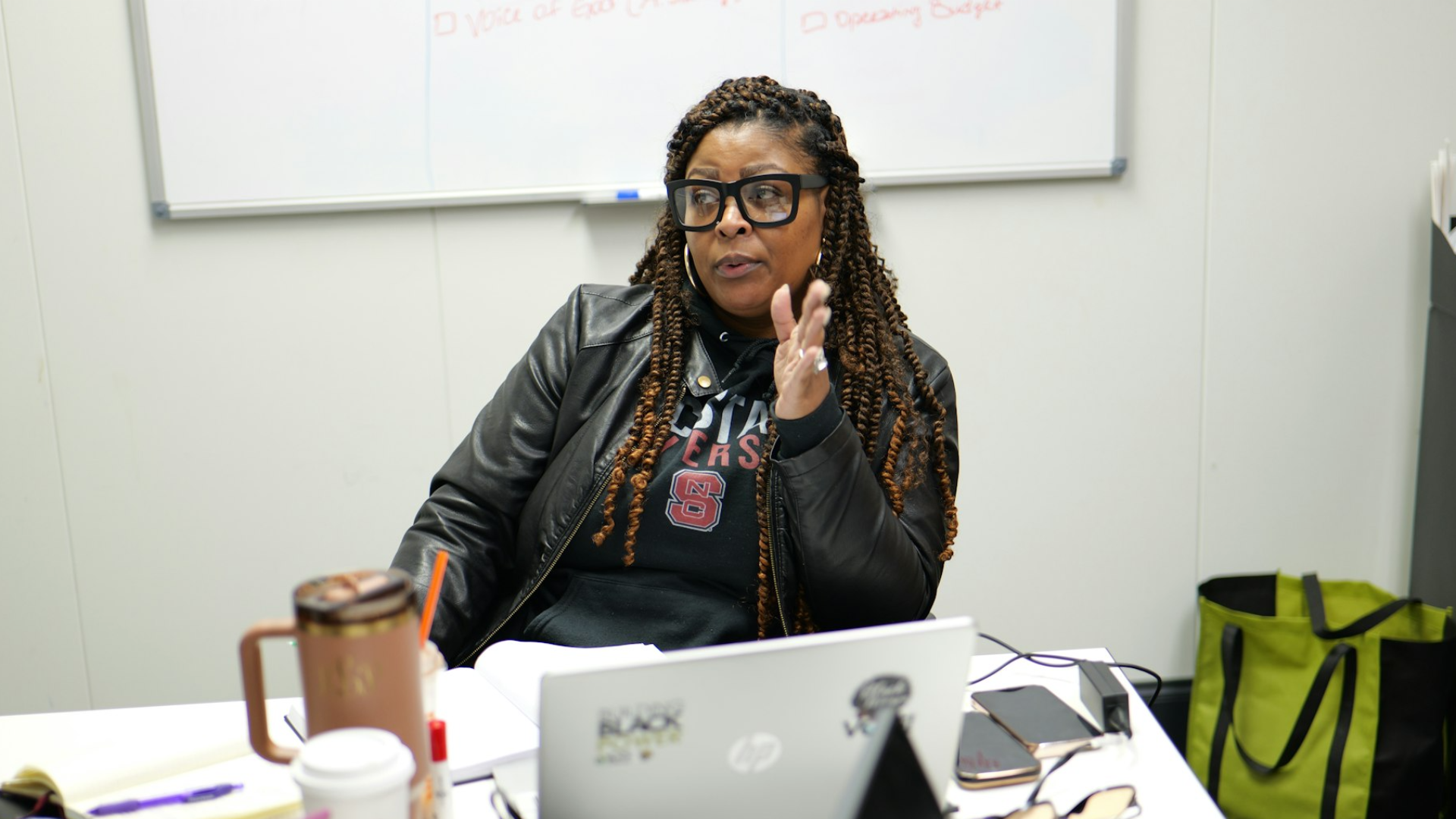
North Carolina Black Alliance director of constituent services and community engagement Katesha Phillips makes a point during a meeting at the organization’s headquarters in downtown Raleigh, N.C., on Feb. 6, 2026.
Before her promotion, Phillips was NCBA’s senior associate director providing day-to-day administrative leadership to the deputy director and working with the chief operations officer on high-level organizational operations. She led the execution of flagship events like the annual NC Black Summit and was the primary liaison between NCBA and its board of directors.
“My new role is a natural evolution of the work I was already doing,” said Phillips, who joined NCBA in 2021. “Much of this work happened throughout flagship events, including the NC Black Summit and the NC Divine 9 Legislative Day, where relationship building is both strategic and personal. Beyond events, I’ve prioritized direct outreach, ongoing communication and the development of advocacy tools that support meaningful engagement. My approach is about being present, accessible and intentional, serving as a connector who helps turn conversations into productive, long-term partnerships.”
Last year, NCBA needed a videographer and audiovisual producer to document the story of Eva Clayton, North Carolina’s first Black congresswoman. Phillips arranged the meeting at Clayton’s home and was onsite when the crew captured the content. Her relationship with the pioneering congresswoman, not to mention the video crew, made for an easygoing experience and a solid deliverable.
“I have already established relationships and built trust with key leaders within the constituencies which allows me to step into this role with a real understanding of the people and communities we are engaging,” Phillips said. “I understand how to engage them authentically, which allows me to connect organizational goals with community needs in a way that is both respectful and effective.”