
North Carolina’s historic Black Belt district under attack by new gerrymandered map

RALEIGH, N.C. — A coalition of North Carolina voting rights organizations held a virtual press conference Monday to condemn the state legislature’s latest attempt to gerrymander Congressional District 1, a historic Black Belt district in eastern North Carolina.
That morning, voting rights advocates and concerned citizens attended the public hearing on Senate Bill 249 at the Legislative Building, where they urged lawmakers to reject the proposed congressional map that would weaken Black voter representation.
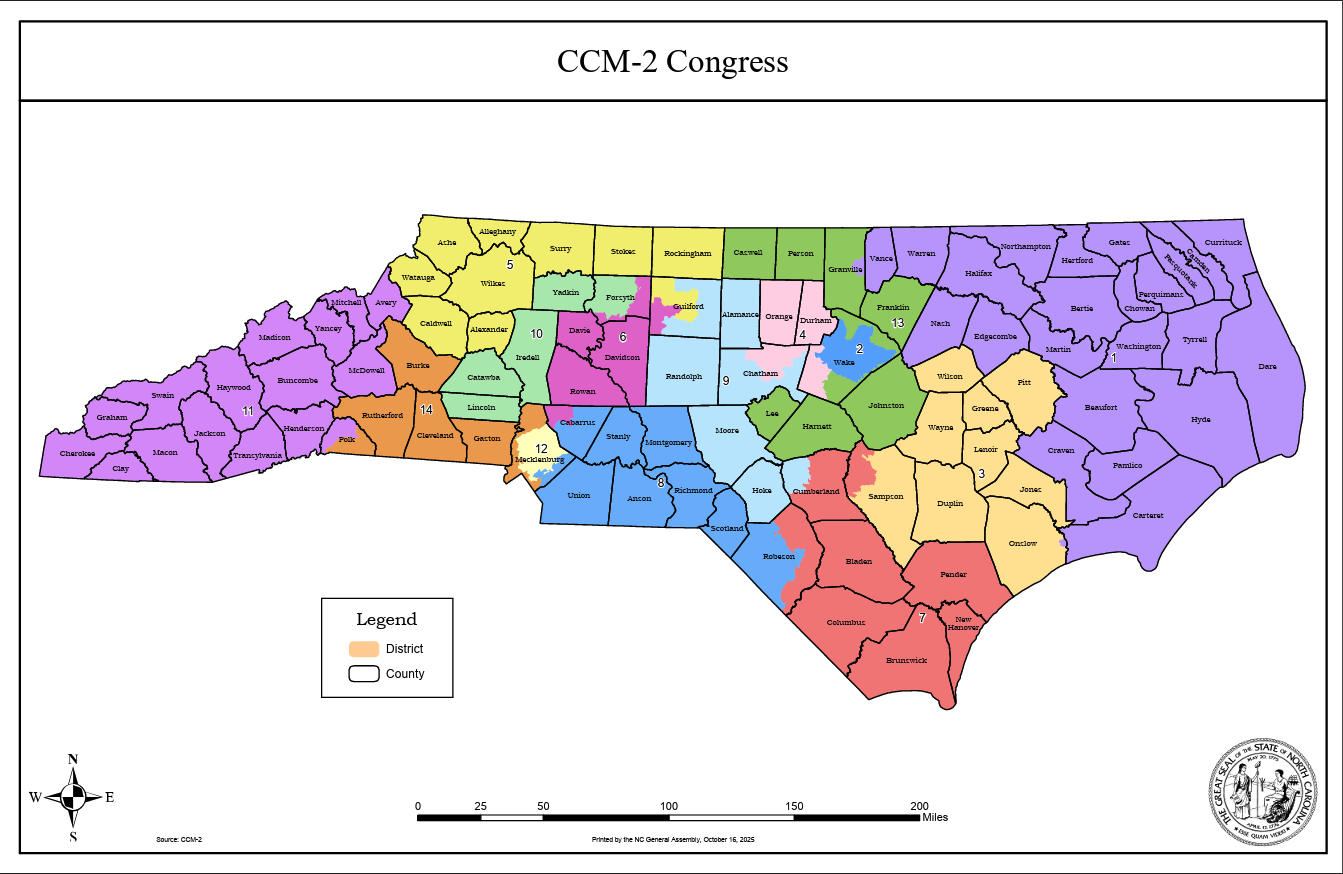
The proposed congressional map would dilute Black voting power in CD1 by stretching the district far south into the southern Outer Banks, decreasing the Black voting age population by more than 8%. This deliberate manipulation targets U.S. Rep. Don Davis, a Black Democrat who won the district by less than two percentage points in 2024, and would likely result in Republicans controlling 11 of North Carolina’s 14 congressional seats — nearly 80% of the delegation in a purple battleground state.
Prioritizing power over people
Hasani Mitchell, democracy and economy coordinator with North Carolina Black Alliance, cut through the political rhetoric to highlight what’s really at stake for everyday North Carolinians.
“When redistricting becomes explicitly tied to a specific party gaining advantage rather than fair representation, it really raises the question about whose interests are being prioritized,” Mitchell said.
He emphasized that the legislature’s most pressing priority should be passing an equitable budget. Yet, lawmakers found time to create gerrymandered maps with no public input — maps that were “not ordered, not requested, and quite frankly, at the time announced, really not necessary.”
A historic district under attack
Mitchell provided critical context about Congressional District 1’s significance:
- Historic legacy: CD1 contains many of the historically Black majority or heavily Black populated counties in eastern and northeastern North Carolina, home to some of the oldest Black communities in the United States, with a century-long legacy of political organizing.
- Political history: The district has not elected a Republican since 1883, and African Americans have been heavily represented for decades.
What these maps don’t address
Mitchell outlined what the new congressional maps fail to do for the people of CD1:
- Nothing for the 300,000-plus North Carolinians who will lose health care coverage, including citizens in CD1
- Nothing for voters who need affordable housing
- Nothing for lowering food costs
- Nothing for the negative environmental impacts affecting CD1 residents
- Nothing for voters who need a livable wage
- Nothing for citizens who need jobs and workforce development
“This is really a deliberate effort to really diminish the voting power of Blacks in North Carolina,” Mitchell said. “It’s really an effort to turn what’s already a lopsided congressional map into a landslide.”
A pattern of disenfranchisement
The coalition highlighted that this represents the fourth time North Carolina’s congressional maps have changed in just five years — a pattern of chaos designed to punish voters for exercising their democratic rights.
Other speakers noted:
- The Triad region — Greensboro, High Point and Winston-Salem — was split among four congressional districts despite residents asking to be kept together
- Fayetteville was “cracked apart” among multiple districts
- Legislative leaders openly admitted the redistricting is designed to create partisan advantage, not serve communities
The path forward
Mitchell’s call to action was clear: “If you’re tired of seeing redistricting prioritized over those issues that you talk about at the dinner table, you need to let your elected officials know.”
The coalition urged North Carolinians to:
- Submit public comments through the General Assembly’s portal
- Contact representatives directly
- Show up to vote and mobilize their communities
“When legislators prioritize redistricting over the real issues that North Carolinians talk about at the dinner table, all voters, regardless of your party affiliation, all voters lose representation on the important issues that matter the most,” Mitchell said.