
NCBA’s calculated, community compass on point at NC Black Summit
RALEIGH — North Carolina Black Alliance (NCBA) and its allies have been heading in the right direction all along. No wholesale course correction needed; just a few navigational tweaks.
Keynote speakers during the sold-out “Charting OUR Course Through a Crisis” — NCBA’s 19th Annual NC Black Summit April 17-18 at the Raleigh Marriott Crabtree — through independent addresses landed on a singular theme:
Resist. Persist. Exist.
The NC Black Summit assembles elected officials, public-policy advocates and conscientious citizens to advance solutions toward a more equitable and just North Carolina.
James Gailliard, senior pastor at Word Tabernacle Church in Rocky Mount, reminded the breakfast crowd that ebbs and flows are a part of life, and Black people have both gone through and emerged from their unfair share of the former. What’s happening in America right now is an ebb, a retreat, a backward trajectory for Black people, yet they can’t miss the moment and overlook the opportunity to rise and grind, he explained. Black folks flowing will be the byproduct of people of faith combining work with prayer, the preacher said.
“This is the kind of moment — hear it — that doesn’t need a new idea,” Gailliard said. “This is the kind of moment that needs an old standard.”
On course, in community
NCBA has been doing that, on the ground galvanizing voters prior to the 2024 general election, still in the trenches six months afterward fighting for every ballot cast in the race between North Carolina Supreme Court Justice Allison Riggs and challenger Jefferson Griffin. The contest remains undecided because Griffin will not concede to recounts showing he lost by 734 votes.
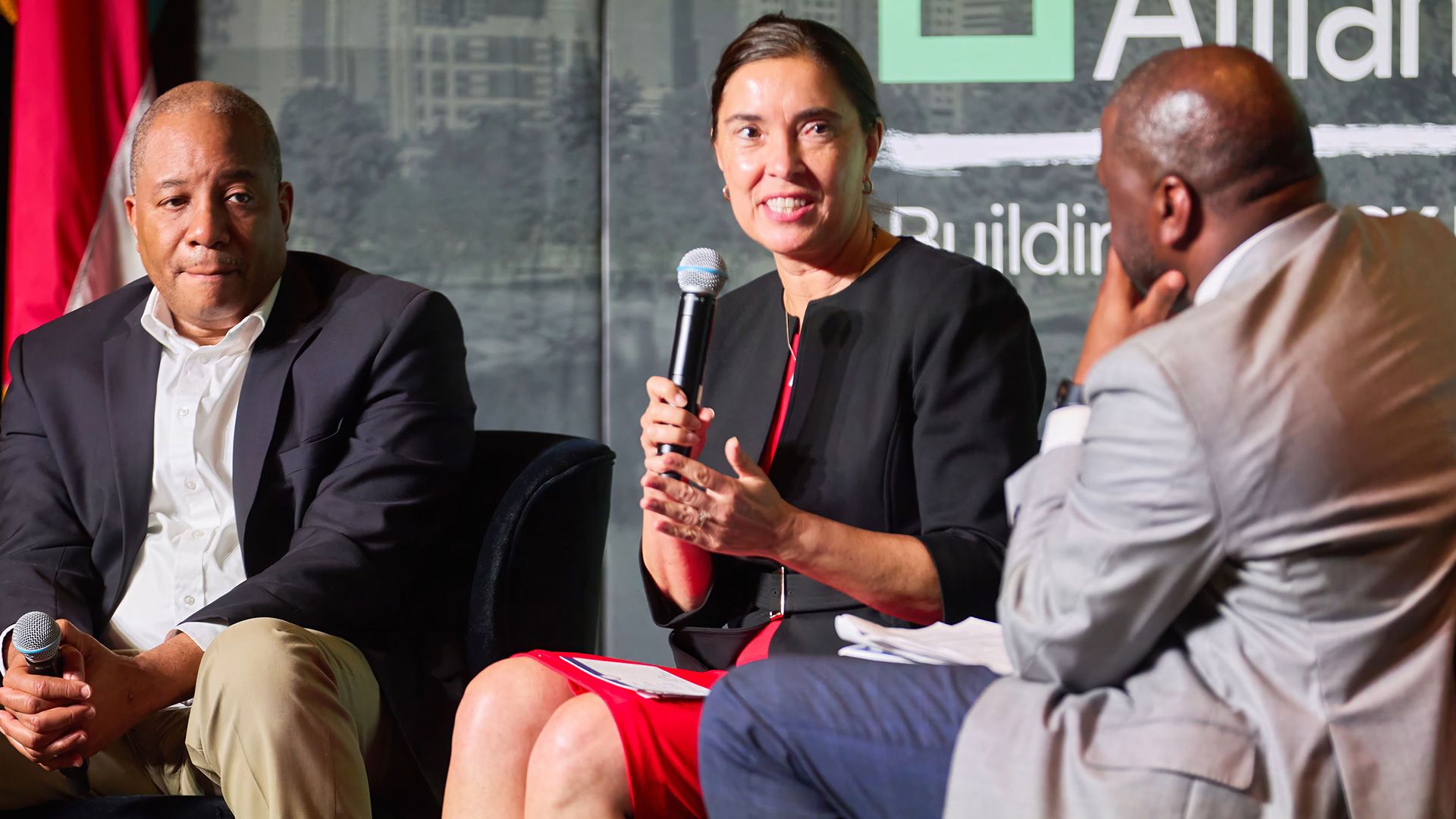
Riggs attended the NC Black Summit, as did fellow state Supreme Court Justice Anita Earls, who was a mainstage panelist with North Carolina Superintendent of Public Instruction Mo Green. They were among the elected officials and public-policy advocates framing issues for attendees like William Dickens, a member of the American Descendants of Slavery Advocacy Foundation. He said the NC Black Summit provided an outlet for everyday citizens to get face time with Black people positioned to put policies in place.
“You get to have that one-on-one,” said Dickens, among nearly 400 NC Black Summit registrants. “They need people power. They need us to be informed to inform them.”
It’s what holds elected officials accountable and keeps them from just shooting from the hip when making decisions, he said.
“Without interacting with me, you could be fighting for things that actually hurt me,” Dickens said.

Unapologetically Black
South Carolina Rep. John King challenged the bunch at lunch to resist policies that suppress Black people and their power. That’s done by showing up for local elections, because it matters who makes decisions as county commissioners and members of school boards, he said. Votes toward who gets to create laws as state representatives and senators absolutely matter, King said.
“If they did not matter, they would not try so hard to keep us from voting,” King said.
Black North Carolinians must demand economic justice and insist on access to health care, as well as push back on attempts to erase Black history, something Dickens seconded.
“Your story matters,” said Dickens, whose group pushes for policies pertinent to Black people in particular. “Broad language gets you excluded from policy.”
The term minorities, for example, could refer to Black people as well as white women, he said.
“Specificity of language is so important, because when you get away from it, they can exclude you from a lot of things,” Dickens said.
Policies specific to the well-being of Black people are the way to avoid Black erasure, King said.

North Carolina Central University student Devin Freeman engages with the Rev. Corine Mack, president of the Charlotte NAACP, during the 19th Annual NC Black Summit at the Raleigh Marriott Crabtree April 18, 2025.
Rise up!
LaTosha Brown, co-founder of Black Voters Matter, put a bow on the NC Black Summit with keynote remarks calling on those in the room to organize and fight and otherwise resist oppression irrespective of political party.
“Black people rise up! You must rise up in North Carolina!” Brown said. “You come from a people that it was in our resistance that we became stronger. It has never worked when we’ve bent the knee. When they’re talking about these elements of fascism, we’ve been screaming it.”
“Racism knows how to wear a suit and a tie just as well as it wears a hood,” King said. “We have never been given justice in this country. We’ve had to drag it into existence.”
Among those receiving special recognition during the NC Black Summit was groundbreaking political pioneer Eva Clayton, the first Black woman elected to Congress from North Carolina. Representatives from NCBA and sister organization Advance Carolina announced their financial commitment to developing a pipeline of political talent through The Honorable Eva Clayton Fellowship.
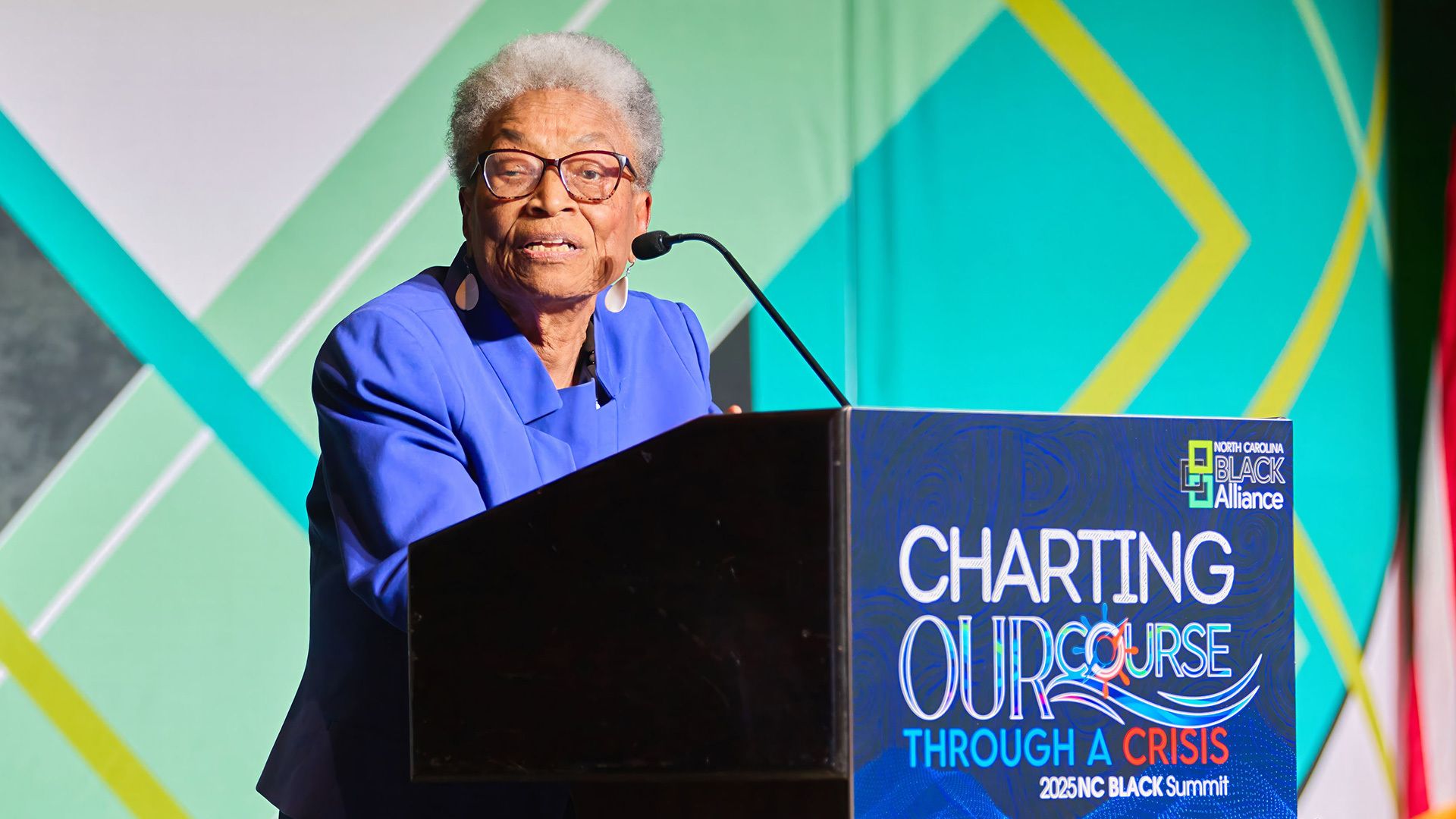
Former Congresswoman Eva Clayton delivers remarks during the 19th Annual NC Black Summit at the Raleigh Marriott Crabtree April 18, 2025.